
My colleague Dan had a sleep problem and a GP who suggested he try improving his sleep hygiene before going straight to prescription aids. Dan had tried chamomile and found it completely useless. He was not optimistic about lemon balm tea. He tried it for a month anyway, mostly because he was tired of being tired. The sleep improved. He still makes it most evenings, three years on — at this point less because of the sleep effect and more because he genuinely likes the taste.
That trajectory — skeptical start, measurable result, habit that stuck because of flavor — is the most honest case for lemon balm herbal tea. Here’s what’s actually behind it.
What Lemon Balm Is and Why It Works Differently From Other Calming Herbs
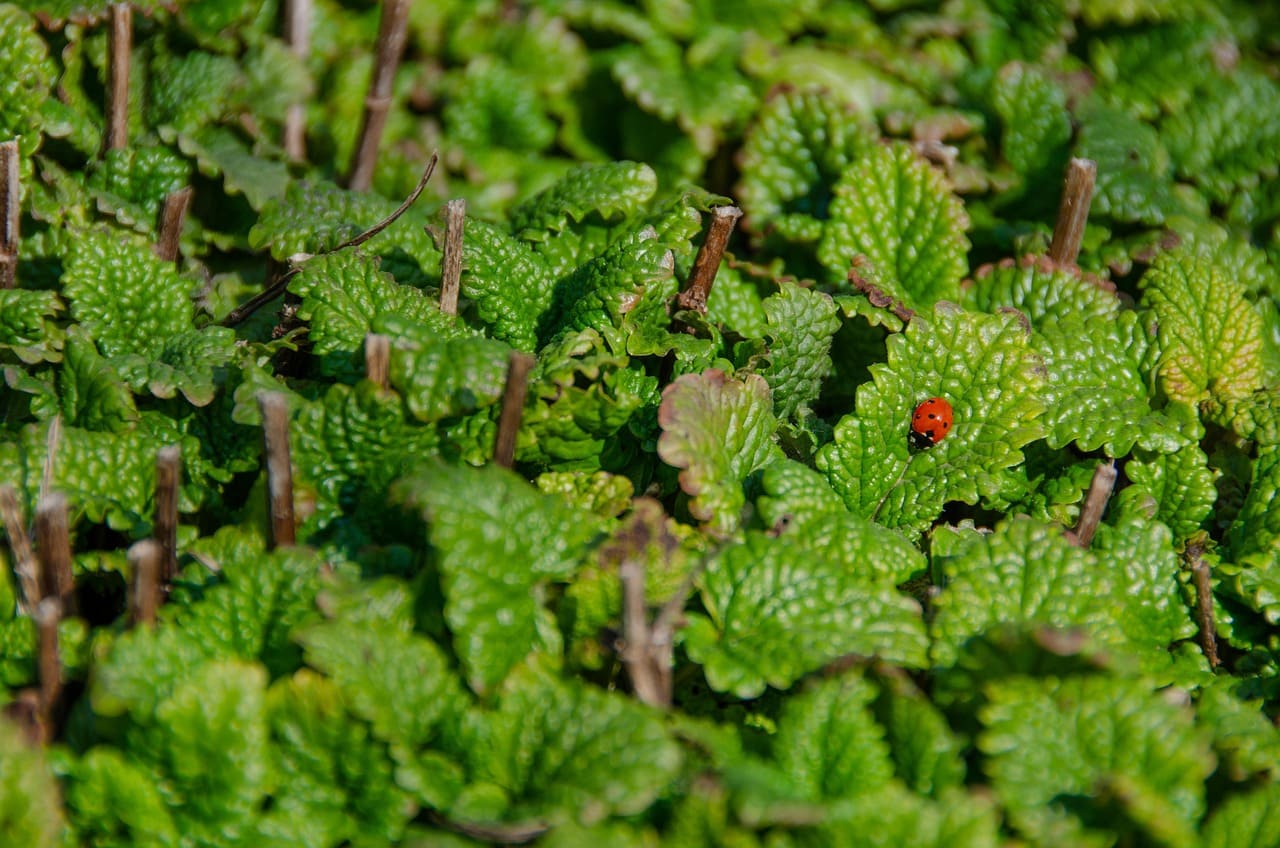
Melissa officinalis is a perennial in the mint family, native to southern Europe and western Asia. The leaves smell like lemon zest with a faint mintiness underneath — that fragrance comes from citral and citronellal, the same aromatic compounds in lemon peel. It grows easily, spreads readily, and produces more leaf than most gardeners know what to do with from late spring through autumn.
The calming effect has a specific mechanism: rosmarinic acid, a polyphenol in the leaves, inhibits GABA transaminase — the enzyme that breaks down GABA, the brain’s primary inhibitory neurotransmitter. By slowing that breakdown, rosmarinic acid allows GABA to stay active longer. The result is a mild reduction in neural excitability that produces the calming and sleep-supporting effect people have been observing in this plant for centuries without knowing the biochemistry. The mechanism doesn’t change what the herb does; it just explains why.
This is also why Dan’s chamomile failure doesn’t predict his lemon balm result. Chamomile works through apigenin binding to benzodiazepine receptors — a different pathway entirely. The two herbs are both calming but they’re not interchangeable, and people who don’t respond to one sometimes respond clearly to the other. Knowing the mechanism helps you make sense of that rather than writing the whole category off.
A Long History That Research Has Mostly Validated
Lemon balm appears in Greek and Roman medical texts for wound healing and digestive complaints. By the medieval period it was standard in monastery herb gardens across Europe — Benedictine monks produced Carmelite Water, a lemon balm-based preparation that appeared in European pharmacopoeias from the 14th century onward and was prescribed for nervous conditions, headaches, and digestive spasms well into the 19th century.
Paracelsus, the 16th-century Swiss physician who was not known for understatement, called it “the best of all herbs for the heart.” Stripped of the hyperbole, that’s a consistent observation about cardiovascular calm and mood support that runs through the entire history of this plant’s use.
Modern clinical research has confirmed the core application. Several small randomized controlled trials have found lemon balm extract reduces anxiety scores and improves sleep quality versus placebo. The effect size is mild to moderate by pharmaceutical standards — which is the right expectation for a food-grade herb taken as a daily tea, not a drug. For people dealing with routine stress and disrupted sleep rather than clinical anxiety disorders, that level of effect is often exactly what’s needed.
Lemon Balm Tea: Flavor, Buying, and What Organic Actually Changes
Lemon balm tea is clean, citrusy, and faintly minty — lighter than chamomile, less assertive than peppermint, genuinely pleasant without sweetening. That last quality matters practically: building an evening habit around a tea that needs honey every time is harder than building one around a tea that doesn’t.
Organic lemon balm tea is worth the price difference in this category specifically because of how the plant’s active compounds are produced. Essential oils and rosmarinic acid accumulate in lemon balm leaves in response to the mild stresses of natural growing conditions. Synthetic fertilizers push rapid leafy growth that dilutes those compounds. Organically grown plants harvested at the right point — just as the flowers begin to open, when essential oil content peaks — produce noticeably more flavorful and potent leaf than conventionally grown product. The taste difference is real enough that it’s worth checking the label.
What to look for when buying:
- Certified organic with the certifying body named — not just “natural”
- Melissa officinalis listed as the botanical species
- Loose leaf over tea bags where possible — the volatile aromatics degrade faster once the leaf surface is broken, which happens in production for tea bags
- Pale green to silver-green color in dried leaf — yellowing indicates age or poor storage
Green Tea With Lemon Balm: The Daytime Version
Green tea with lemon balm is a different application than the evening calming tea, and it’s one that doesn’t get enough attention. Green tea contributes caffeine and L-theanine — a combination that produces alert focus without the jittery edge that coffee creates in many people. Adding lemon balm’s rosmarinic acid on top of that extends the calming layer further, taking some of the mild anxiety that caffeine can produce in sensitive people and smoothing it out without removing the energy.
Dan uses this version in the morning. He describes it as “coffee for people who don’t want to feel like their heart is doing something alarming,” which is an accurate if dramatic summary of what it does.
To make it well: brew green tea at around 75°C, not boiling — boiling water makes green tea bitter regardless of quality. Add a teaspoon of dried lemon balm and steep three to four minutes. The green tea base determines the caffeine load; adjust the ratio based on how much energy you want from the cup versus how calm you want to feel while it’s happening.
What Pairs Well With Lemon Balm Herbal Tea
Lemon balm herbal tea blends well because it doesn’t dominate — the flavor brightens and lifts rather than taking over. That makes it a useful base for building blends with more specific purposes:
- Chamomile — adds floral sweetness and a second calming pathway; together they cover more neurological ground than either does alone, which is why this is the most common commercial blend in the category
- Passionflower — for a more pronounced sleep effect; lemon balm provides the flavor and the gentle edge, passionflower provides the depth for people who need more than mild support
- Creeping thyme (Thymus serpyllum) — distinct from common culinary thyme, with a softer and more floral character; traditionally used for respiratory support, it adds an earthy, slightly herbal depth that works particularly well against lemon balm’s brightness in a winter blend; good with honey, better than it sounds on paper
- Lavender — effective in small amounts; too much lavender makes any tea taste like soap, which is a consistently underreported problem with commercial lavender blends
To brew: fresh leaves, a small handful in just-boiled water for five to eight minutes. Dried, one teaspoon per cup for eight to ten minutes. Fresh is noticeably more fragrant than dried because the volatile oils haven’t had time to dissipate — if you grow your own, use it fresh as much as possible.
Three years ago Dan’s GP recommended a tea. Dan expected nothing. He now has a morning version and an evening version and a strong opinion about water temperature for green tea. That’s what a good herb does — it makes itself part of the day without you noticing it happened.