
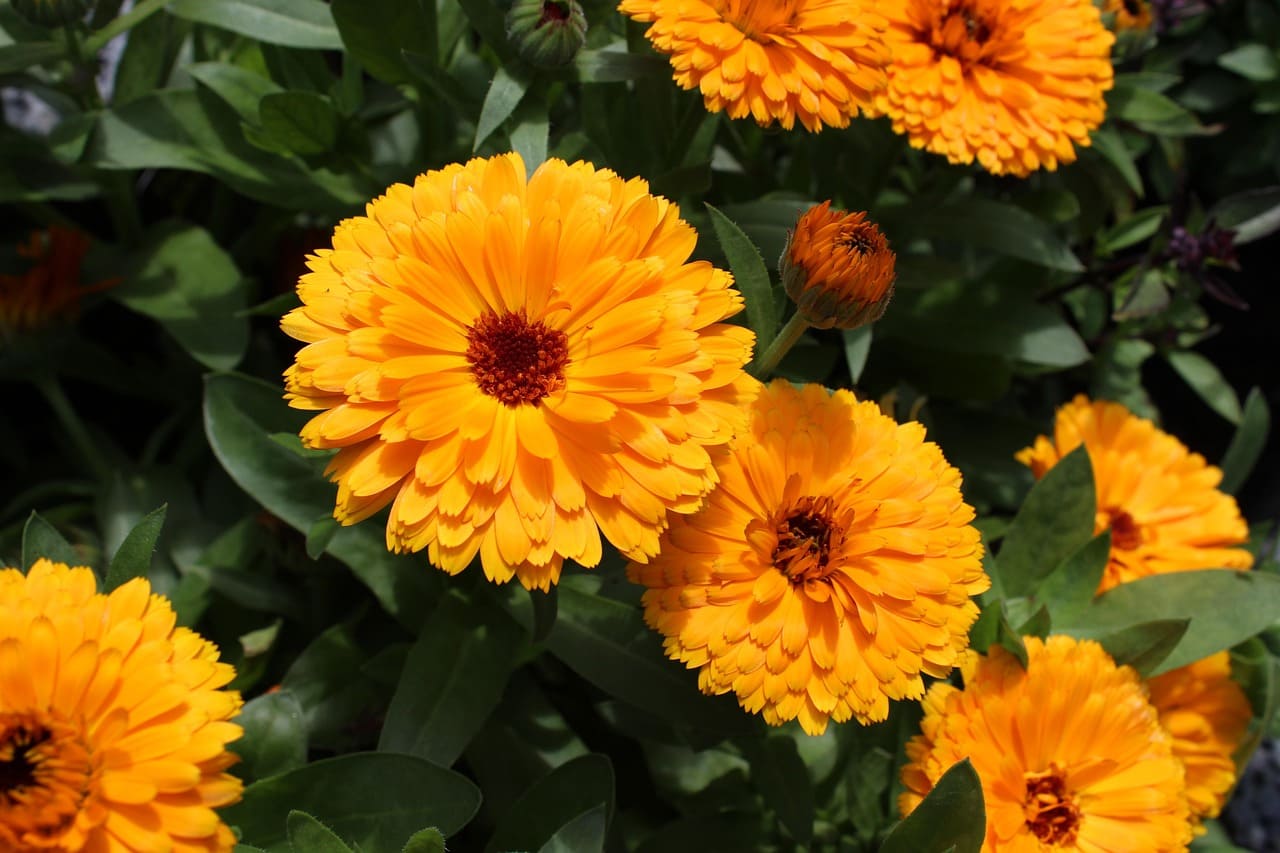
My mother bought one pot of calendula from a garden centre about twenty years ago on a whim. She never bought another. They’ve been self-seeding in the same beds every spring since, requiring nothing from her except harvesting. Each summer she dries the petals and infuses them in olive oil. That oil goes on her hands every winter. She hasn’t bought a commercial hand cream in two decades.
That’s the kind of endorsement worth paying attention to — not a study, not a label claim, but a practice that someone kept doing for twenty years because it worked. Here’s what’s behind it.
What Calendula Officinalis Is — and What It Isn’t
Calendula officinalis is a flowering annual in the daisy family, native to the Mediterranean and widely cultivated for both ornamental and medicinal use. The flowers are bright orange to yellow — daisy-shaped, resinous, slightly sticky when fresh. That stickiness comes from triterpenoids, flavonoids, and carotenoids in the petals: the compounds responsible for the plant’s medicinal activity.
A naming confusion worth clearing up: despite being called pot marigold, calendula officinalis marigold is not the same plant as the common garden marigold (Tagetes species) that lines flower beds. They look similar, they share the marigold name, and they are genuinely different plants. Tagetes has no meaningful medicinal history and is toxic to cats and dogs in large amounts. If a product is using its calendula claim to sell what is effectively a Tagetes preparation, that’s not the same thing — and it’s worth knowing the difference before you buy.
One caution before using any calendula preparation: the plant is in the Asteraceae family, which includes ragweed and chamomile. People with Compositae allergies can react to calendula topically. A patch test before applying a new cream or oil to a large area of skin is a sensible precaution, not an excessive one.
A Medicinal History That Held Up Under Research
Calendula has been in cultivation since at least the 12th century, and references to its use in wound healing, fever reduction, and digestive support appear across medieval European herbal texts under various names — goldes, ruddes, and marigold among them. Medieval physicians dried the petals for wound washes and poultices. The petals were added to food for color and flavor, earning the plant the nickname “poor man’s saffron” for their ability to give broths and porridges a golden hue at negligible cost.
What makes calendula’s history more credible than most folk remedy histories is that the same applications — skin healing, wound support, anti-inflammatory use — appear consistently across different traditions and centuries without any particular shared knowledge base. When multiple independent traditions arrive at the same conclusion about a plant, it’s usually because they’re observing something real.
Modern research has largely confirmed that observation. Calendula officinalis is one of the better-studied herbs for topical use, and the evidence supports the traditional applications more directly than is the case for many plants with similarly long histories.
What the Research Actually Supports
The clinical evidence for topical calendula is stronger than most people expect. Triterpenoids in the petals have demonstrated anti-inflammatory effects in multiple studies. Polysaccharides extracted from the plant appear to support wound healing and immune response at the tissue level. A randomized controlled trial published in the Journal of Clinical Oncology found calendula cream more effective than petroleum jelly for managing acute dermatitis in breast cancer patients undergoing radiation — a demanding clinical context that speaks to the preparation’s real efficacy, not just its gentleness.
Calendula preparations appear in the European Scientific Cooperative on Phytotherapy (ESCOP) monographs and the German Commission E guidelines for wound care and skin inflammation — two of the more rigorous evidence-based herbal medicine frameworks in existence. That institutional recognition is meaningful. It’s not a supplement company’s marketing claim; it’s an assessment by bodies that require actual evidence.
The scope matters though. Calendula is a genuinely useful preparation for minor cuts, abrasions, dry and irritated skin, and chronic low-grade inflammation. It’s not going to close a serious wound or treat a skin infection. Using it within its actual range of effectiveness is how it earns its place in a medicine cabinet; expecting it to do more than that is how disappointment happens.
Calendula Cream: How to Buy It and How to Make It
Calendula cream is the most practical form of the plant for most people, and the quality variation between products is significant. The problem is concentration: many commercial creams list calendula extract well down the ingredients list, after water, emulsifiers, and preservatives. A product in that category contains very little actual calendula and is mostly selling the name. The active compounds need to be present in meaningful quantities to do anything.
When buying calendula cream, check for:
- Calendula listed near the top of the ingredients, ideally as a calendula-infused oil rather than a diluted water-based extract
- Calendula officinalis named as the botanical species — not just “marigold extract,” which could be Tagetes
- Minimal synthetic fragrance — the most common source of reactions in people who think they’re reacting to the calendula
- Organic certification or third-party testing where available
The simplest preparation — dried petals cold-infused in olive oil for four weeks in a warm spot, then strained — is what my mother makes, and it consistently outperforms the commercial creams she’s tried on her hands. The triterpenoids and flavonoids infuse readily into oil. You don’t need a sophisticated formulation. You need enough calendula in the base and a carrier oil that absorbs well.
Growing Calendula and Using It in Tea
Calendula seeds are among the simplest to grow. Sow directly after the last frost — the plant prefers cool conditions and flowers more prolifically in spring and autumn than in peak summer heat. Deadhead consistently and the plant will keep flowering until the first hard frost. A single well-maintained plant will produce more flower heads than most people can dry and use through a season.
For drying: harvest flower heads when fully open, lay on a rack in a warm ventilated spot out of direct light, and allow a few days to dry completely. Store in an airtight container away from heat. Properly dried and stored petals keep their medicinal potency for up to a year, though the color fades.
As a tea, dried calendula petals steep into a golden, mildly earthy infusion with a faint floral sweetness. It’s gentle enough for daily use and pairs particularly well with lemon balm tea (Melissa officinalis) — the lemon balm’s citrusy brightness cuts through calendula’s earthiness, its mild calming effect rounds out the anti-inflammatory direction of the calendula, and together they make an evening blend that genuinely tastes good without sweetening. It’s a combination that works on flavor and function simultaneously, which is the best argument for any herbal pairing.
The fresh petals are edible too — slightly bitter and faintly peppery, good scattered over salads or used as a garnish. They’re not a flavor powerhouse, but they contribute color and a mild bitterness that works well against creamy dressings.
Twenty years of unprompted self-seeding in my mother’s garden is the most durable endorsement I know for any plant. It stayed because it earned its place. That’s the bar worth applying to anything in the herb garden.