
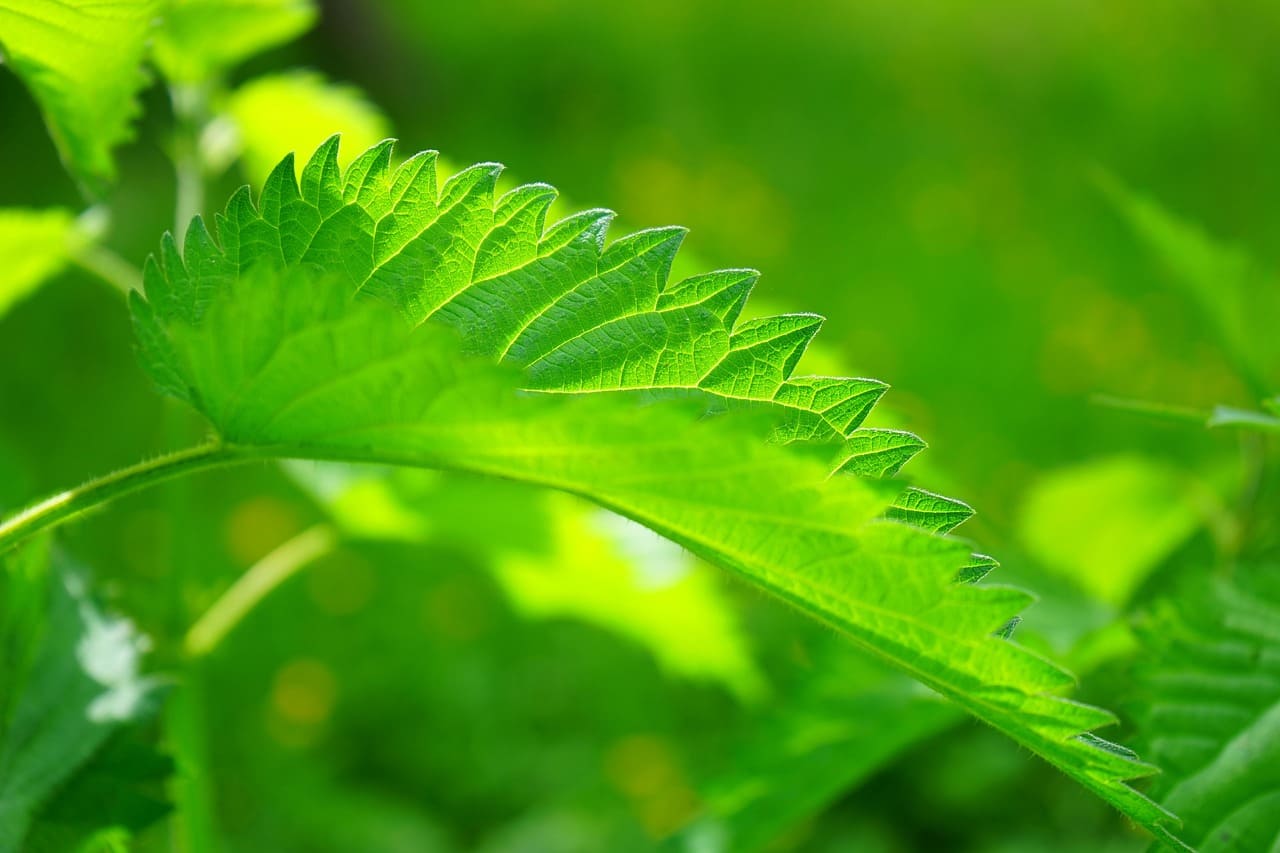
The first time my sister-in-law Elena encountered a stinging nettle plant, she was scrambling up a bank in rural Scotland and grabbed one bare-handed for support. She described the next twenty minutes as “a burning situation nobody warned her about.” That evening, the farmhouse they were staying in served nettle soup for dinner. Elena, still nursing her hand, was furious. She ate two bowls.
That’s the most honest introduction to this plant. The sting is genuine, the indignation is understandable, and the usefulness — once you know how to work with it — is real enough that people across most of the world have been eating and brewing it for at least three thousand years. The sting is just the cover charge.
What the Stinging Nettle Plant Is and Why It Stings
Urtica dioica grows across Europe, Asia, North America, and northern Africa — anywhere temperate climates meet disturbed soil. It spreads aggressively by rhizome and establishes itself in hedgerows, riverbanks, and field edges. Gardeners know it as a persistent weed. Foragers know it as a free harvest that comes back every year without any effort on their part.
The sting comes from hollow silica-tipped hairs called trichomes on the leaves and stems. On contact they break and inject formic acid, histamine, serotonin, and acetylcholine into the skin — which is why the response is immediate, burning, and itchy rather than just sharp. It resolves on its own within an hour or two. Cooking, drying, or blanching the plant for 30 to 60 seconds denatures those compounds entirely and removes the sting, leaving a nutritionally dense green that tastes like mineral-rich spinach.
The nutritional content is the part that surprises people. Dried nettle leaf contains iron, magnesium, calcium, potassium, vitamins A, C, and K, and several B vitamins. Per gram of dry weight, it compares favorably with cultivated leafy greens like kale — which is a strange thing to say about a plant that’s been growing wild in hedgerows for millennia while people domesticated other crops instead. The fact that nettle fell out of mainstream use is a historical accident, not a reflection of its value.
A History That Spans Three Thousand Years and Most Continents
Greek and Roman physicians documented nettle for joint pain and muscle stiffness. Roman soldiers reportedly practiced urtication during cold campaigns — deliberately striking their own skin with fresh nettle plants to generate warmth and counter stiffness through the inflammatory response. Medieval European herbalists used it for anemia, urinary complaints, and as a spring tonic after the nutritional shortfall of winter. Ayurvedic medicine and East Asian traditional medicine both incorporate related Urtica species for similar purposes.
That cross-cultural pattern — multiple traditions, no shared communication, broadly similar conclusions — carries more weight than any single account. It doesn’t replace clinical evidence, but it’s the kind of signal that makes research worth doing, and in nettle’s case some of that research has now been done.
Nettle also has a material history that most herb guides skip entirely. Nettle fiber was used to make cloth in Scotland and Germany for centuries before cotton became widely available — German military uniforms in World War I reportedly used nettle fabric when cotton supplies ran short. It’s a dye plant, a food crop, and a fiber source. This isn’t a niche remedy that survived on reputation. It’s a plant that was genuinely useful across multiple domains and simply got displaced when industrial agriculture made other options easier.
Stinging Nettle Tea: What It’s Good For and How to Make It
Stinging nettle tea made from dried leaf is the most accessible form of the plant. It produces a mild, earthy, slightly grassy infusion with a dark color and no bitterness — caffeine-free, easy to drink without sweetening, and genuinely pleasant as a daily tea if you like green, mineral flavors.
The application with the strongest research backing is allergic rhinitis — seasonal hay fever and related respiratory symptoms. Several small clinical trials have found nettle leaf extract reduces allergy symptoms, and the mechanism is plausible: quercetin and related flavonoids in the plant inhibit histamine release at the cellular level, which is the same pathway targeted by pharmaceutical antihistamines, though with a considerably milder effect. For mild seasonal symptoms, nettle tea is a reasonable first-line option. For severe allergies, it’s a supplement to medical treatment, not a substitute for it.
Traditional uses with less clinical evidence but consistent historical documentation include joint inflammation support, urinary tract health, and iron replenishment in mild deficiency. The anti-inflammatory research is directionally consistent with those applications; the clinical trial data is thinner.
To brew:
- 1 to 2 teaspoons of dried nettle leaf per cup of just-boiled water
- Steep 10 to 15 minutes — longer for a stronger infusion and more mineral content
- A standard fine-mesh strainer works well; dried nettle doesn’t require anything special
- Pairs well with peppermint for brightness; pairs particularly well with calendula (Calendula officinalis) for a sweeter, more floral blend — calendula’s mild anti-inflammatory and skin-soothing properties complement nettle’s nutritional density, and the combination is considerably more approachable for people who find plain nettle tea too earthy
Stinging Nettle Seeds: Different Plant, Different Effect
Stinging nettle seeds are a different proposition from the leaf — different compounds, different applications, and a stronger effect that warrants a different approach. The seeds don’t sting. The trichomes that produce the leaf’s characteristic response aren’t present on the seeds, so they can be handled and eaten directly.
Herbalists classify nettle seeds as an adaptogen and a trophorestorative specifically for the kidneys — a term for a plant that supports and gradually restores normal function in a particular organ or system rather than producing an immediate acute effect. The research base is limited and largely traditional, but the seeds have a strong clinical following among herbal practitioners working with fatigue, adrenal stress, and early-stage kidney stress. Fresh seeds are more potent than dried; small amounts (around half a teaspoon to start) sprinkled on food or added to smoothies is the typical starting point.
Some people find nettle seeds noticeably energizing — more stimulating than the leaf in a way that can feel like too much if you’re sensitive to stimulating herbs. That’s worth knowing before you add a large amount to a morning smoothie. Start small, observe the response, and adjust from there. The seeds are one of those herbal preparations where the dose genuinely matters more than it does with the leaf.
Cooking With Stinging Nettle: Practical Guidance
The window for eating nettle is spring, before the plant flowers. Young growth — the top four to six leaves from fresh shoots — is tender and mild. Once the plant flowers it becomes bitter and develops compounds that can irritate the urinary tract in large quantities; post-flower nettle is a job for the compost bin, not the kitchen.
Blanch briefly in boiling water for 30 to 60 seconds to neutralize the sting, then squeeze out moisture and treat like cooked spinach. It works in soup, pasta, pesto, frittata, and as a side green. The flavor is richer and more mineral than spinach — closer to watercress — with enough depth to carry a simple soup without much else added.
Nettle soup has been made across northern Europe for centuries specifically because the plant is one of the first things available in early spring, emerging before most other greens and providing iron and vitamins at the point in the year when people historically needed them most after winter. The recipe endures because the soup is genuinely good, not just because it’s traditional.
Elena now forages for nettle every spring and freezes enough soup to last through summer. She uses gloves. She has since the first time, which is the only sensible response to the experience of not using them. Fresh nettle demands respect in the handling and rewards it in the kitchen — that’s probably the most accurate one-sentence description of this plant overall.