
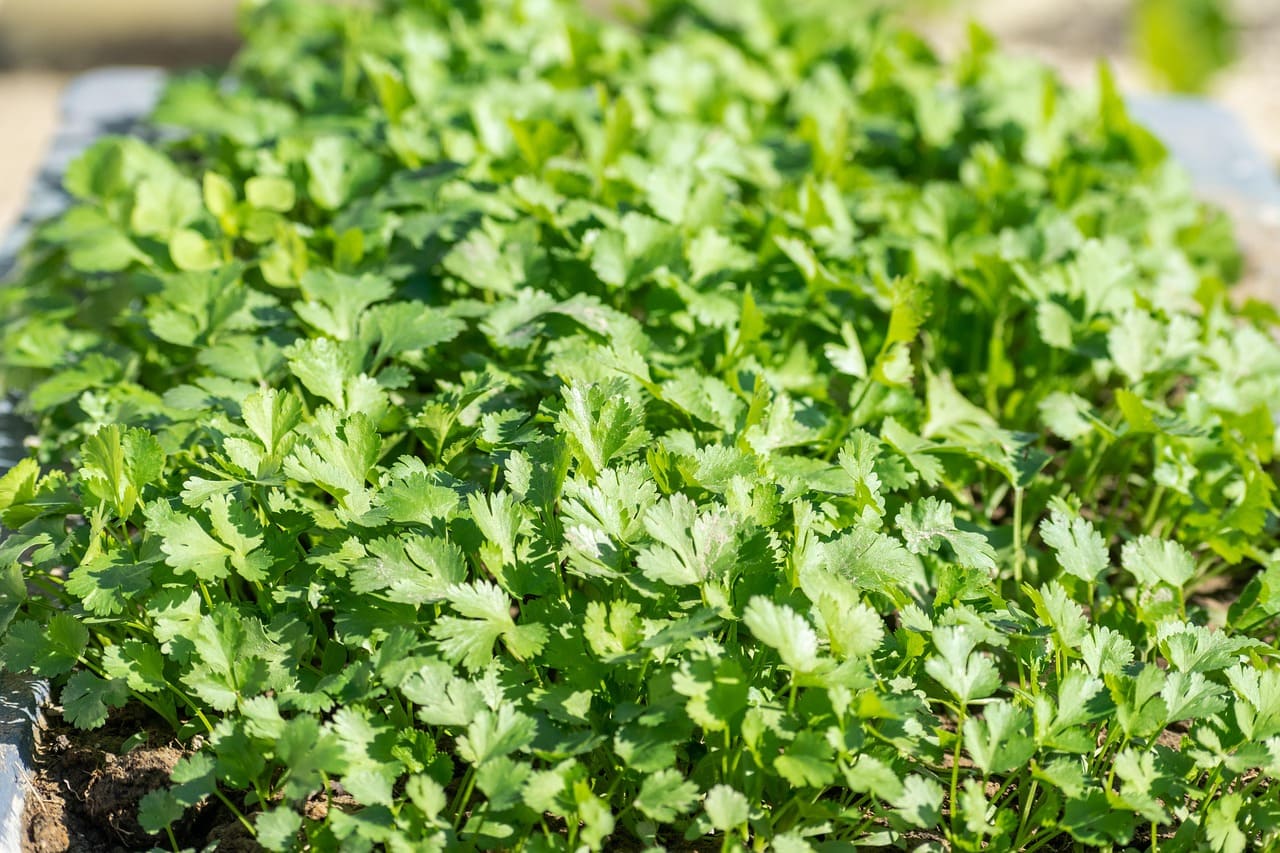
My friend Priya grew up in a household where cilantro went into almost everything — dal, chutneys, scrambled eggs, rice dishes finished with a fistful of leaves. When she moved in with her partner, who describes cilantro as tasting like soap, she assumed she’d have to give it up at home. She didn’t. She learned which dishes carry it invisibly and which ones let it announce itself. Six years later the cilantro is still in the kitchen. So is the partner.
Cilantro is that kind of herb. Divisive enough to generate genuine complaints, useful enough that most serious cooks keep it regardless. Here’s what’s actually worth knowing.
What Cilantro Is — and Why Some People Can’t Stand It
Cilantro is the leaf of Coriandrum sativum, an annual in the carrot family native to a region stretching from southern Europe through western Asia. The same plant produces two distinct culinary ingredients: the fresh leaves (cilantro) and the dried ripe seeds (coriander). They taste nothing alike. Cilantro leaves are bright, citrusy, and faintly soapy. Coriander seeds are warm, earthy, and mildly floral. Treating them as versions of the same flavor is one of the more common cooking mistakes.
The soap perception is not imaginary and not a matter of taste sophistication — it has a documented genetic basis. A variation in the OR6A2 olfactory receptor gene causes certain aldehyde compounds in cilantro to register as soapy rather than citrusy. For people carrying that variant, the reaction is consistent and strong. Brief cooking reduces the aldehydes and softens the effect, which is why some cilantro-averse people find they tolerate it fine in cooked dishes but not raw. That distinction is worth knowing before writing the herb off entirely.
Vietnamese Cilantro: A Different Plant, Not Just a Variety
Vietnamese cilantro (Persicaria odorata, known in Vietnamese as rau răm) is not a cultivar of common cilantro — it’s a different genus entirely. The confusion is understandable because the two are used in overlapping ways in Southeast Asian cooking, but the plants are botanically unrelated and taste noticeably different.
Vietnamese cilantro is spicier and more peppery than common cilantro, with a sharper finish and less of the aldehyde soapiness that divides people. The leaves are longer, narrower, and often marked with a dark chevron pattern. It appears extensively in Vietnamese pho, fresh spring rolls, and herb salads, and it grows as a tropical perennial rather than a cool-season annual — meaning it thrives in warmth and moisture where common cilantro would bolt immediately.
For people who find common cilantro difficult, Vietnamese cilantro is worth a genuine try. The flavor profile is different enough that some people who react badly to one have no issue with the other at all. They’re not interchangeable in the garden even when recipes treat them as interchangeable on the plate.
Growing Cilantro from Seed
Cilantro seed germinates fast and the plant grows quickly — three to four weeks from sowing to first harvest under decent conditions. The problem is bolting. Once temperatures consistently exceed around 27°C (80°F), cilantro rushes to flower, the leaves turn sparse and bitter, and the plant’s useful life is essentially over. A single large sowing in spring produces one flush of good leaf and then a frustrating summer of nothing. The fix is succession sowing: small batches every two to three weeks through spring and again in early autumn.
Growing notes that actually matter:
- Sow directly where it will grow — cilantro has a taproot and dislikes being moved
- Lightly crush the seed casing before sowing — what looks like one seed is actually two fused together; splitting it improves germination noticeably
- Harvest from the outer leaves, not the central growing tip — removing the tip triggers bolting faster
- Let a few plants go to seed — the dried seeds are coriander spice, and the plant will self-seed reliably for the following season
- Full sun to partial shade, consistent moisture, well-drained soil
Priya keeps a pot of cilantro on the kitchen windowsill through winter and grows it directly in the garden from spring to early summer. The indoor pot bolts faster and produces less, but it means fresh cilantro is available year-round rather than relying on supermarket bunches that go yellow within two days of purchase. A small, consistently maintained plant beats a large seasonal one for most household use.
Fresh Cilantro vs. Dried Cilantro: They’re Not Substitutes
Fresh cilantro is a finishing herb. Its volatile aromatic compounds evaporate quickly with heat, so adding it at the start of cooking wastes most of what makes it useful. The right approach across essentially every cuisine that uses it — Mexican, Indian, Thai, Vietnamese — is the same: add it at the end, or serve it raw alongside the finished dish.
Dried cilantro behaves completely differently. It loses the bright citrus character that defines fresh cilantro and retains a mild, earthy background presence instead. It has legitimate uses — spice blends, dry rubs, long-cooked dishes where fresh would disappear entirely — but it cannot replace fresh cilantro where brightness is the point. A salsa or guacamole made with dried instead of fresh is a lesser dish. That’s not opinion; the volatile compounds responsible for cilantro’s signature flavor simply aren’t present in dried form in meaningful quantities.
What Pairs Well With Cilantro
Cilantro’s citrusy brightness works best against rich, fatty, or heavily spiced flavors — which explains why it appears so consistently in cuisines built around those profiles. The pairings that work most reliably:
- Lime — the standard combination; the acidity sharpens cilantro’s citrus notes and cuts through richness at the same time
- Garlic — provides savory depth that anchors cilantro’s brightness; the base of most cilantro-forward marinades for a reason
- Chives (Allium schoenoprasum) — a quieter pairing than most on this list, but a useful one; chives contribute a mild onion note that adds savory background without competing with cilantro’s citrus character; the combination is particularly good in cold applications — potato salad, sour cream dips, herb dressings — where you want herb complexity without any single flavor dominating; it’s also one of the easier ways to introduce cilantro to skeptical eaters, because the chives soften the herb’s edge
- Cumin — earthy and warm; together with cilantro they form the flavor foundation of a substantial portion of Mexican and Middle Eastern cooking
- Coconut milk — the fat and sweetness provide the contrast that makes cilantro’s sharpness register cleanly; standard in Thai curries and Southeast Asian soups for exactly this reason
Priya’s partner still wouldn’t choose cilantro. But he eats the potato salad with chives and fresh cilantro, and he finishes the dal. He’s never mentioned the soap. The herb found its place — it usually does, if you give it the right context.